The Democratic Party Is Dead. Long Live the Democrats.
It hurts me to write that headline.
My political roots go back to the coal mines of Wyoming. In my family, the sun rose and set on John L. Lewis, the legendary head of the United Mine Workers. Voting Democratic wasn’t merely a political choice. It was a family tradition.
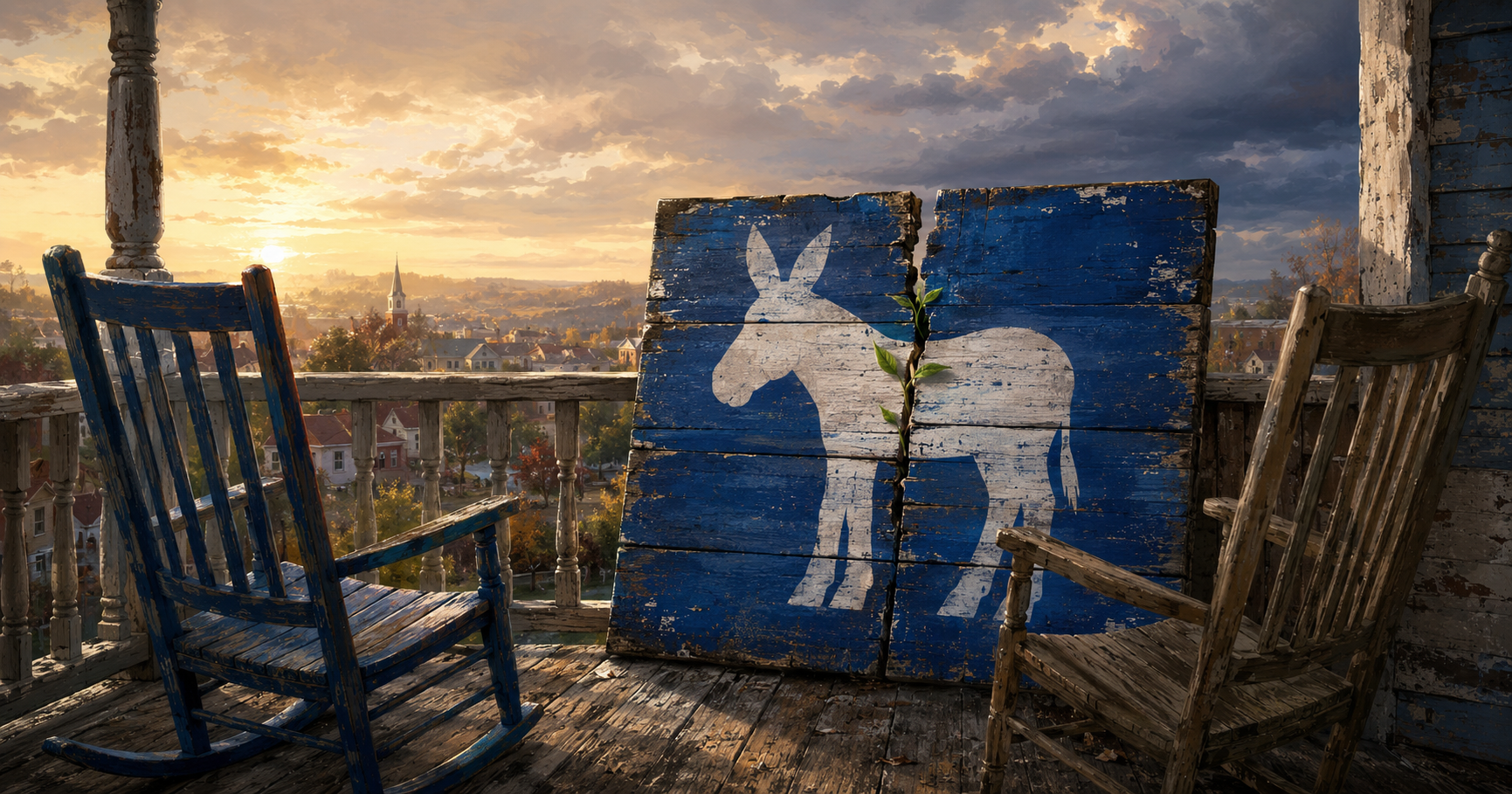
But that Democratic Party is gone.
Today’s party has been hijacked by special interests, ideological activists and a far-left fringe that seems more interested in making pronouncements than making progress. Too many of its most visible figures appear to be auditioning for social media instead of governing the country.
When preserving the party becomes more important than protecting the country, we are in trouble.
The Republicans don’t get a pass. They have their lunatics, too. Both parties have allowed their loudest and angriest members to dominate the conversation. In the process, they have nearly lost the ability to compromise.
Does anyone remember the famously combative relationship between Ronald Reagan and Democratic House Speaker Tip O’Neill?
They fought tooth and nail over policy, but they did not treat each other as mortal enemies. O’Neill reportedly said that before six o’clock it was politics, but after six they could be friends. Reagan joked that he kept his watch permanently set at six. They disagreed without believing disagreement made the other man evil. Reagan himself publicly recalled that relationship.
Can you imagine that happening today?
I would pay good money to watch Donald Trump and the Squad sit down in the Oval Office for an honest conversation. It might require a referee, two security guards and a fire extinguisher, but I’d watch.
American greatness has been forged on the anvil of compromise, followed by what was sometimes a very uneasy unity. Nobody got everything he wanted, but the country moved forward.
Here’s the rub: We need a two-party system.
What we have now is something closer to a political establishment protecting itself while the lunatic fringes on both sides shout at each other for the cameras. One faction blocks the other, both sides raise money from the outrage, and very little gets done.
I once read that there must be opposition in all things for progress to occur. Think about a weightlifter. Without resistance, he accomplishes nothing. No opposition. No growth.
But opposition is not the same thing as paralysis.
There is an arrogance in modern politics. Absolute power does indeed corrupt absolutely, and arrogance breeds rigidity. Why compromise with the other fellow when you know, 100 percent and beyond the shadow of a doubt, that you are right?
But thought is not binary. If I am right about something, that does not automatically make you wrong about everything.
I think air conditioning may deserve part of the blame.
Many of the compromises that created this country were hammered out during a sweltering Philadelphia summer. The delegates to the Constitutional Convention worked for months inside Independence Hall with the windows closed to preserve secrecy. The National Park Service describes the conditions as “stifling”.
I can almost hear one of the delegates finally saying, “All right, gentlemen. Let’s settle this, get out of this oven and go home.”
Comfort permits people to argue forever.
So, what is the solution?
Will moderate Democrats reassert control over their party? I don’t think so. The existing power structure has too much money, too many professional operatives and too much invested in keeping things exactly as they are.
We need a new party.
Not a third party that attracts 6 percent of the vote, hands elections to somebody else and disappears. I mean a political movement capable of replacing the Democratic Party as the nation’s responsible center-left party.
It needs its own Trump, although not necessarily someone who behaves like Trump. It needs a disruptive leader strong enough to break the existing machinery and build something new. That leader could be a moderate, liberal-leaning businessman or woman who understands budgets, deadlines, consequences and the almost forgotten art of getting things done.
There’s that phrase again: getting things done.
We also need structural changes.
First, term limits.
When Congress became a career, we got career politicians. Too many arrive in Washington promising to change the system and spend the next 30 years becoming part of it.
Second, shut down the revolving door.
Public service should be service, not an apprenticeship for a lucrative lobbying career. Let members of Congress serve their time and then return home to live under the laws they helped create. Washington already has enough lobbyists. We do not need to manufacture another crop every election cycle.
Third, repeal the 17th Amendment.
Before its ratification in 1913, state legislatures selected U.S. senators. The House represented the people directly, while the Senate represented the states. That arrangement created another check within the federal system. The 17th Amendment replaced legislative selection with the direct popular election of senators.
Direct election sounds more democratic, and it certainly solved some serious problems involving corruption and deadlocked state legislatures. But it also weakened the states’ institutional voice in Washington and turned Senate campaigns into enormously expensive statewide popularity contests.
Maybe the old system was flawed. The current one isn’t exactly covering itself in glory.
Finally, some moderate but liberal-leaning latter-day Moses needs to rise, gather the common-sense Democrats and lead them out of the political wilderness.
Let the old party die from its own poison. Build something new from its better traditions: working people, practical government, civil rights, fiscal responsibility and a willingness to compromise without surrendering every principle.
The country needs a sane, effective Democratic Party.
If the existing party can no longer become one, perhaps it is time to replace it.
At least, that’s the way I see it from my front porch.
Pull up a chair.
Until next time…
The Old Geezer